
Fbi Anti Piracy Warning Rules That Protect Your Digital Content
The fbi anti piracy warning is a familiar sight for most movie fans in the United States. It is that bright, blocky screen that pops up right when the popcorn is ready. Most people just wait for it to flicker away. However, this notice serves as a blunt instrument for the Department of Justice. It reminds the audience that digital theft carries heavy penalties. Alex Rivera notes that while it feels like a buzzkill, it is the only thing standing between creators and total chaos. It is a digital fence.
The VCR Panic Of The 1970s
The history of this warning is rooted in pure industry panic. Back in the 1970s, the VCR changed everything. Suddenly, people could record TV shows in their living rooms. They could copy rented tapes for their friends. Hollywood executives were terrified. They saw their control slipping away. They needed a way to tell the public that “sharing” was actually stealing.
The early versions were not flashy. They were often just white text on a blue background. These screens cited specific federal laws with a very dry tone. The goal was simple: scare the average person. It was a simpler era of technology. But the message was loud. By the 1980s, the official crest was added. This made the warning look like a direct threat from the government. It turned a movie night into a legal briefing.
Deciphering Title 17 Of The US Code
Protecting creativity is baked into the American legal system. Even the Constitution mentions the rights of discoverers and writers. This led to the Copyright Act of 1976. This law is the foundation of the modern media world. It gives creators the power to say who gets to copy their work. It is about ownership. More importantly, it is about the money that keeps the industry moving.
When that warning screen appears, it points to Title 17. This section of the law is a massive rulebook for intellectual property. It defines what counts as “infringement.” Federal agents do not view this as a minor issue. They see digital theft as a massive drain on the national economy. It is not just about a few missing dollars from a billionaire’s pocket. It is about protecting a multi-billion dollar sector that employs millions.
Why Those Scales Of Justice Look So Scary
The visual design of the warning is a masterpiece of intimidation. The scales of justice are front and center. The bold letters of the Federal Bureau of Investigation scream authority. These graphics are not decorative. They represent the full weight of the federal government. They signal that the viewer is entering a legal zone. The government is essentially putting its boots on your living room floor.
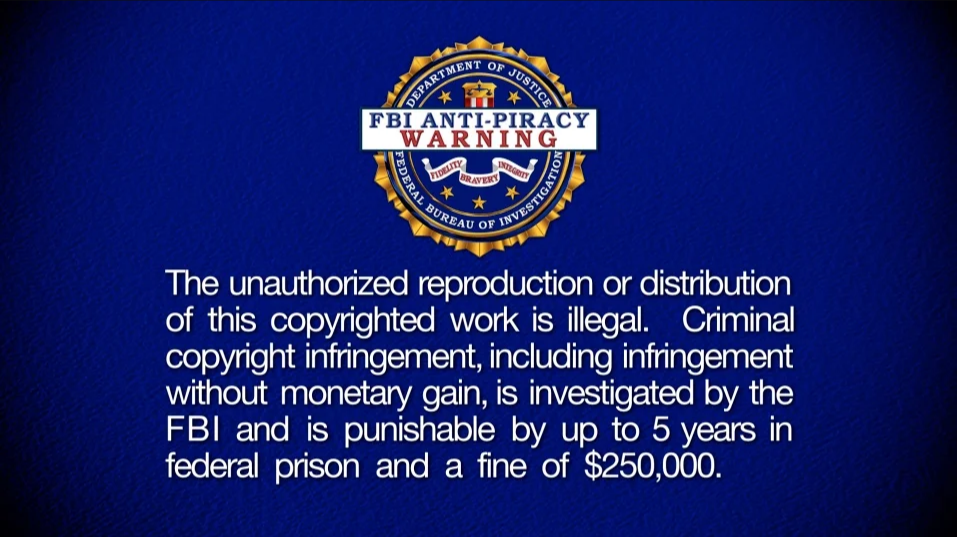
The language is chosen for maximum impact. It mentions that criminal copyright infringement is a serious matter. It explicitly notes that these crimes may constitute a felony. Felonies are life-altering events. They lead to permanent records. They stop people from voting or owning firearms. A felony record can prevent someone from getting a mortgage. That is a massive price to pay for a downloaded action flick.
The Myth Of The “Personal Use” Get Out Of Jail Free Card
Many people operate under total delusions about piracy. They think that if they don’t charge money for a copy, it is legal. This is completely false. Giving away free copies still violates the law. The owner of the copyright has the sole right to distribute. It does not matter if a cent never changes hands. The law cares about the unauthorized distribution, not just the profit.
Another myth involves “personal use.” People think they can download anything as long as they don’t show it in a park. While “fair use” exists, it is incredibly narrow. It usually covers things like news reporting or academic research. It almost never covers a Friday night movie marathon. If the content wasn’t paid for, the rights aren’t there. Using the “I found it on a site” excuse doesn’t work in federal court.
Why Your VPN Is Not A Magic Cloak
Some tech-savvy users think they are invisible. They use a VPN to mask their location and feel safe. While a VPN hides an IP address from a basic tracker, it is not a shield against federal agents. The FBI has tools that go far beyond basic tracking. They look for digital footprints and payment patterns. They follow the money and the server logs.
Technology moves at a lightning pace. But the law eventually catches up with the runners. The fbi anti piracy warning remains a valid threat in the age of encrypted data. Investigators are patient. They often wait for a major distributor to make one small mistake. Once the door opens, everyone on the network is at risk. It is a dangerous game of cat and mouse.
How Piracy Hits The Little Guy In Hollywood
Piracy is often called a victimless crime. That is a lie. It costs the US economy billions every single year. When a movie is stolen, the theater takes the first hit. When theaters struggle, they lay off staff. This means the guy sweeping the floors loses his paycheck. It affects the projectionists and the concession stand workers. It is a massive domino effect.
Look at the end credits of any movie. There are thousands of names there. These are cooks, drivers, and painters. They are not all millionaires. Most are working-class people trying to pay rent. Piracy takes money directly from the budgets that pay these workers. It makes it harder for small films to get made. It hurts the fans because the quality of content starts to drop.
Playing By The Rules In A Streaming World
Staying legal is easier now than ever before. There is no excuse for piracy in the age of Netflix and Disney+. These services pay for the rights to show content. Using them means the viewer is a legitimate customer. Buying or renting digital copies is also a safe bet. The quality is better and the security is guaranteed. It is the only way to watch with a clear conscience.
Content creators should also be careful. Using a song or a clip without a license is a gamble. There are plenty of royalty-free libraries available for use. These resources keep projects safe from the legal hammer. Always check the terms of use before hitting “upload.” It avoids a lot of stress down the road. Reporting illegal sellers is also a good move. It helps keep the local economy healthy.
FAQs
What happens if I ignore the fbi anti piracy warning?
Ignoring the warning can lead to civil lawsuits or criminal charges. Penalties include fines up to $250,000 and five years in prison.
Does the warning apply to YouTube videos?
Yes, copyright laws apply to all digital content. If you upload copyrighted material without a license, you are violating federal law.
Is it illegal to record a movie in a theater?
Yes, recording a movie in a theater is a federal crime. It is a major focus of anti-piracy efforts in the United States.
Who created the anti-piracy warning?
The warning was created through a partnership between the FBI and various industry groups like the MPAA.
You may also read: